Mona Lisa
The Empty Space That Made Her Famous
A locked door, an empty wall and the unlikely crime that turned a painting into an icon.
 90
90The story, with a little more room
About a 90-second read
Beyond the
90 seconds.
On the morning of August 22, 1911, French painter Louis Béroud arrived at the Louvre expecting to copy the Mona Lisa.
Instead, he found four hooks and an empty wall.
At first, nobody panicked.
Works were routinely removed for photography or conservation. It took hours for the museum to confront a rather embarrassing possibility:
the Mona Lisa had vanished.
The theft itself possessed none of the elegance later generations might expect from a crime involving the world’s most famous painting.
Vincenzo Peruggia, an Italian former Louvre worker, had entered the museum wearing a white workman’s smock. He removed the painting, separated it from its frame and walked towards an exit.
When he found a service door locked, he struggled with it until another worker appeared.
The man helped him open it.
Security history has enjoyed more distinguished mornings.
Paris then lost its mind.
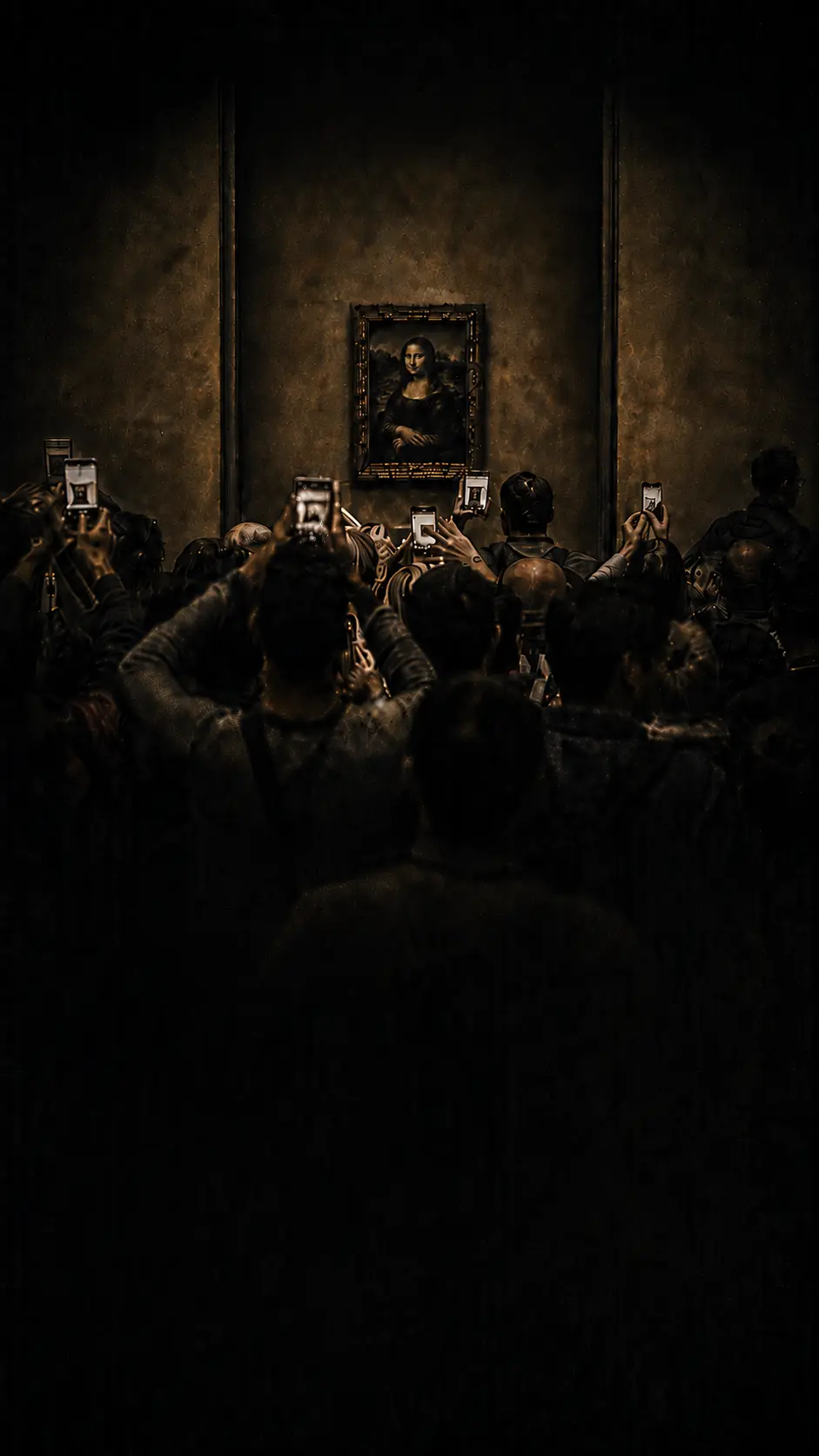
Newspapers printed the missing face repeatedly. Crowds visited the Louvre to stare at the vacant space. Guillaume Apollinaire was arrested. Pablo Picasso was questioned.
Neither had stolen the painting.
Peruggia, meanwhile, kept it hidden in his Paris apartment for more than two years.
In 1913 he carried it to Italy and contacted a Florentine art dealer, claiming he wished to return an Italian treasure supposedly stolen by Napoleon.
There were two difficulties with this patriotic defence.
He also wanted money.
And Napoleon had never stolen the Mona Lisa. Leonardo himself had taken it to France, where it eventually entered the royal collection.
Peruggia was arrested. The painting returned to Paris.
But the woman who came back was not quite the woman who had left.
The Mona Lisa had already been admired by artists and critics.
The theft gave her something museums alone rarely manufacture:
mass celebrity.
Her face had spent 28 months on front pages, postcards and in the public imagination.
Long before Instagram, the basic machinery of fame was already working perfectly.
Sometimes the quickest way to make an image unavoidable is to make it disappear.