The Acropolis
When Even Solitude Has a Price
How the world’s most famous ancient citadel became a modern encounter shaped by crowds, access and expectation.
 90
90The story, with a little more room
About a 90-second read
Beyond the
90 seconds.
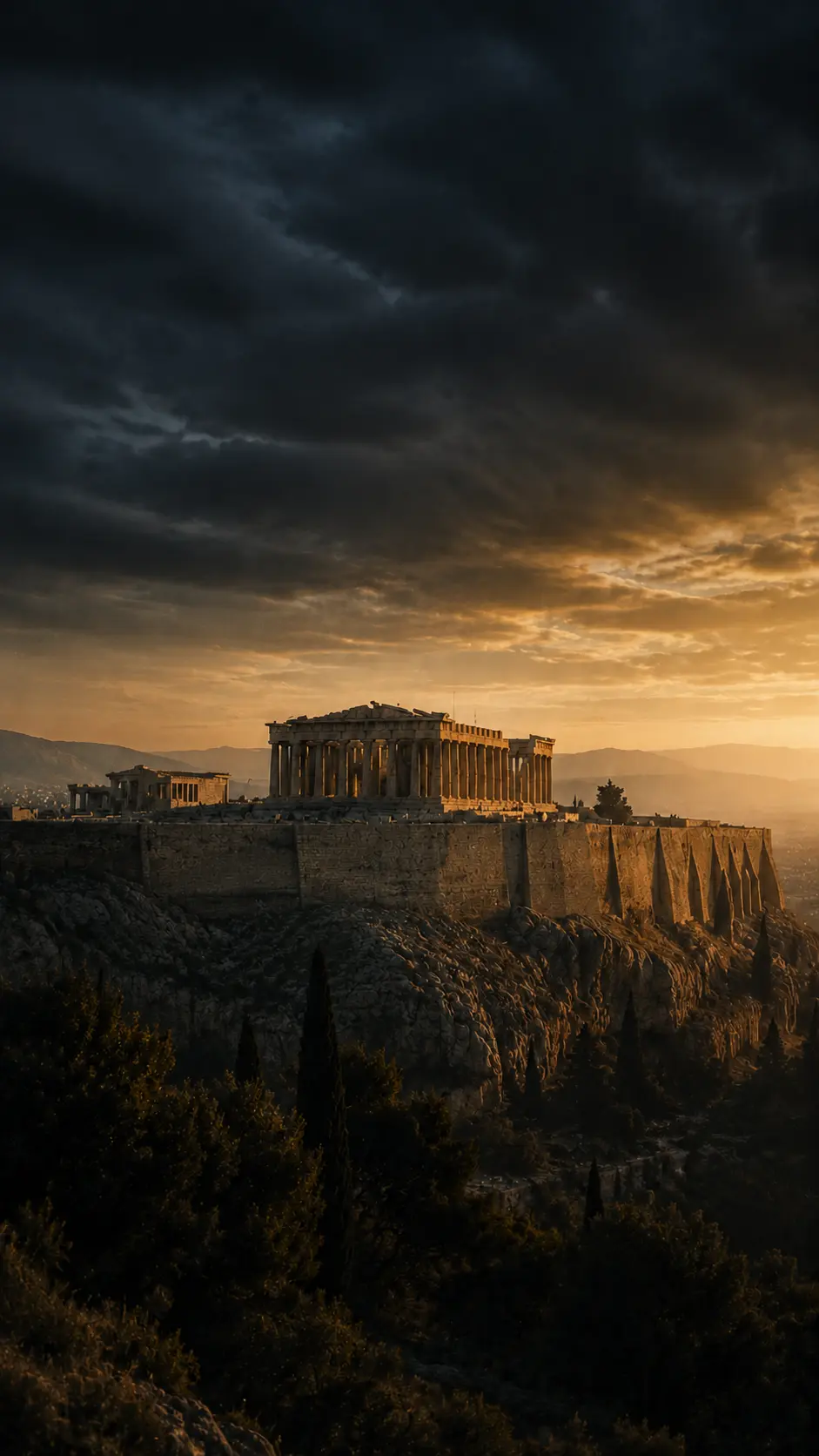
For €5,000, the Acropolis can become considerably quieter.
The premium experience introduced around the monument offers very small groups access at the edges of the normal visiting day — early in the morning or after regular crowds have left.
The obvious product is the Parthenon.
The real luxury is everybody else disappearing.
This is a useful clue to what the modern “experience economy” has become.
In 1999, business theorists B. Joseph Pine II and James H. Gilmore gave a name to a shift already underway: companies increasingly stopped selling only goods and services and began selling memorable experiences around them.
A coffee ceased to be coffee.
It became a ritual involving provenance, design, expertise and preferably lighting kind enough to social media.
Travel followed the same logic with remarkable enthusiasm.
A walk became an urban experience. Dinner became a culinary journey. A holiday became a carefully assembled collection of moments which, ideally, could be documented before they had actually finished happening.
At the luxury end of the market, however, the logic becomes even more revealing.
The scarce commodity is often subtraction.
No queue.
No stranger entering the photograph.
No forest of raised smartphones between you and the masterpiece.
No public, in other words.
At the Acropolis, money can buy something previous generations of visitors could never reliably order: controlled intimacy with a monument that belongs, symbolically at least, to everyone.
There is nothing inherently wrong with paying for an extraordinary experience. Museums and monuments need revenue; people have always paid for access, comfort and privilege.
The more interesting question is what happens when experience itself becomes a product designed in advance to feel spontaneous, unique and personal.
We spent decades learning to buy things.
Then we learned to buy services.
Now we buy memories before we have made them.
Perhaps the final luxury will be something much harder to package:
a moment nobody planned for us.