1816
The Summer That Never Came
Failed harvests, strange skies and the volcano that disrupted the world.
 90
90The story, with a little more room
About a 90-second read
Beyond the
90 seconds.
The summer of 1816 had a scheduling problem.
It failed to arrive.
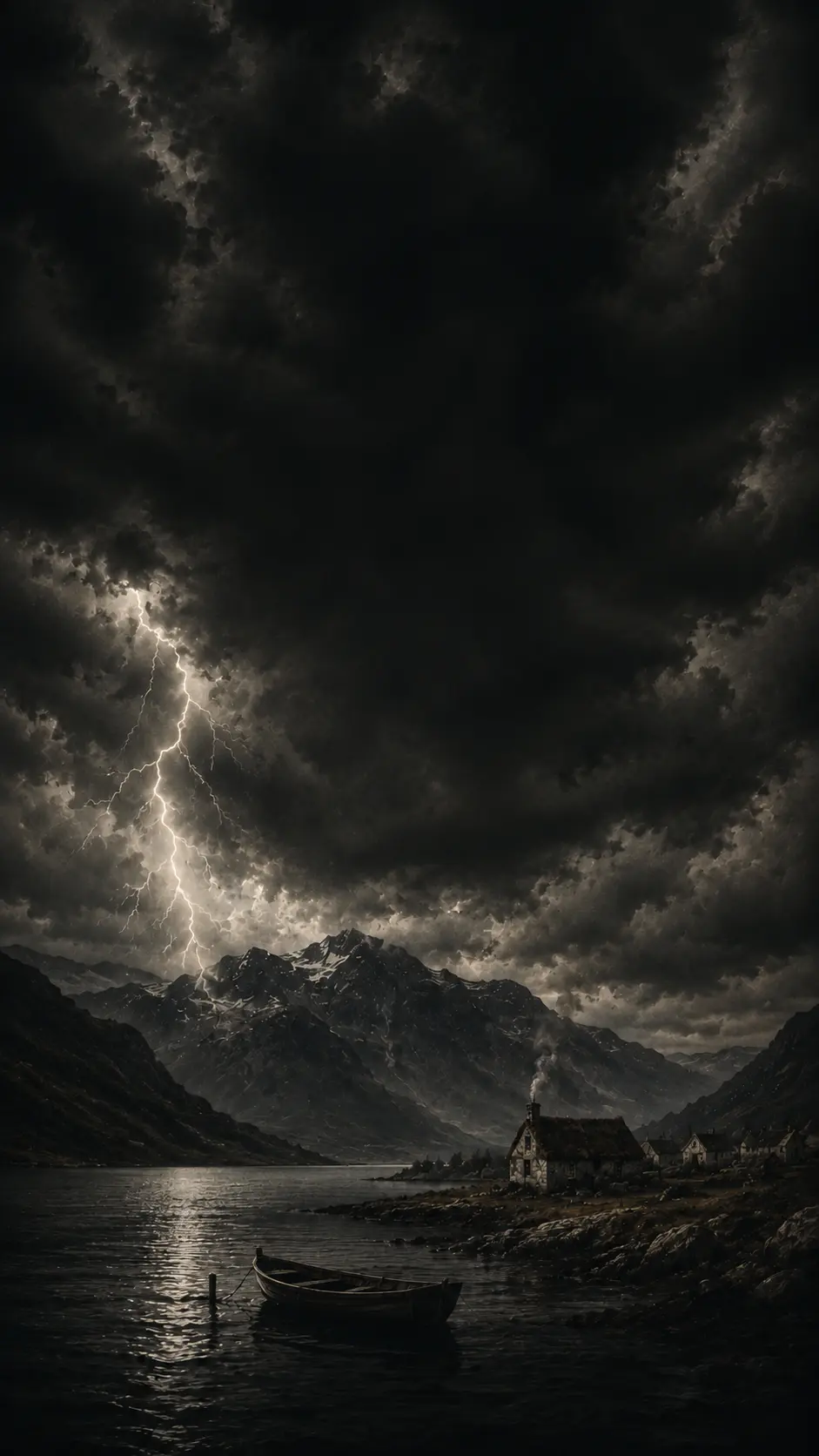
Snow fell in June in parts of North America. European harvests failed beneath cold rain. Food prices rose, hunger spread and skies acquired strange colours.
The cause lay thousands of kilometres away.
In April 1815, Mount Tambora in present-day Indonesia produced one of the largest volcanic eruptions in recorded history. Enormous quantities of sulphurous material reached the stratosphere, where aerosols reflected part of the Sun’s energy back into space.
The planet cooled.
The effects reached their most notorious expression the following year, remembered ever since as the Year Without a Summer.
Climate catastrophe, however, has a habit of producing cultural side effects nobody orders.
At Lake Geneva, persistent rain trapped Lord Byron, Percy Bysshe Shelley, Mary Godwin — soon Mary Shelley — and their companions indoors. They entertained themselves by writing ghost stories.
The eighteen-year-old Mary began imagining a scientist who manufactures life from dead matter.
Bad weather helped give the world Frankenstein.
Two centuries later, another climate phenomenon is dominating the conversation.
In 2026, the World Meteorological Organization warned that the developing El Niño could become the strongest observed in the modern record.
The comparison requires one important warning.
El Niño is not Tambora.
One is a recurring ocean-atmosphere cycle in the tropical Pacific. The other was a gigantic volcanic eruption that temporarily blocked incoming solar energy. Their mechanisms are entirely different.
What connects them is more unsettling.
Both demonstrate how a disturbance originating far from us can reorganise weather, harvests, prices and ordinary life across continents.
The difference is that today such natural shocks are arriving on a planet already warmed by human activity.
In 1816, people looked at the darkened skies and had little idea what had happened.
We have rather fewer excuses.